
BIO
HISTORY
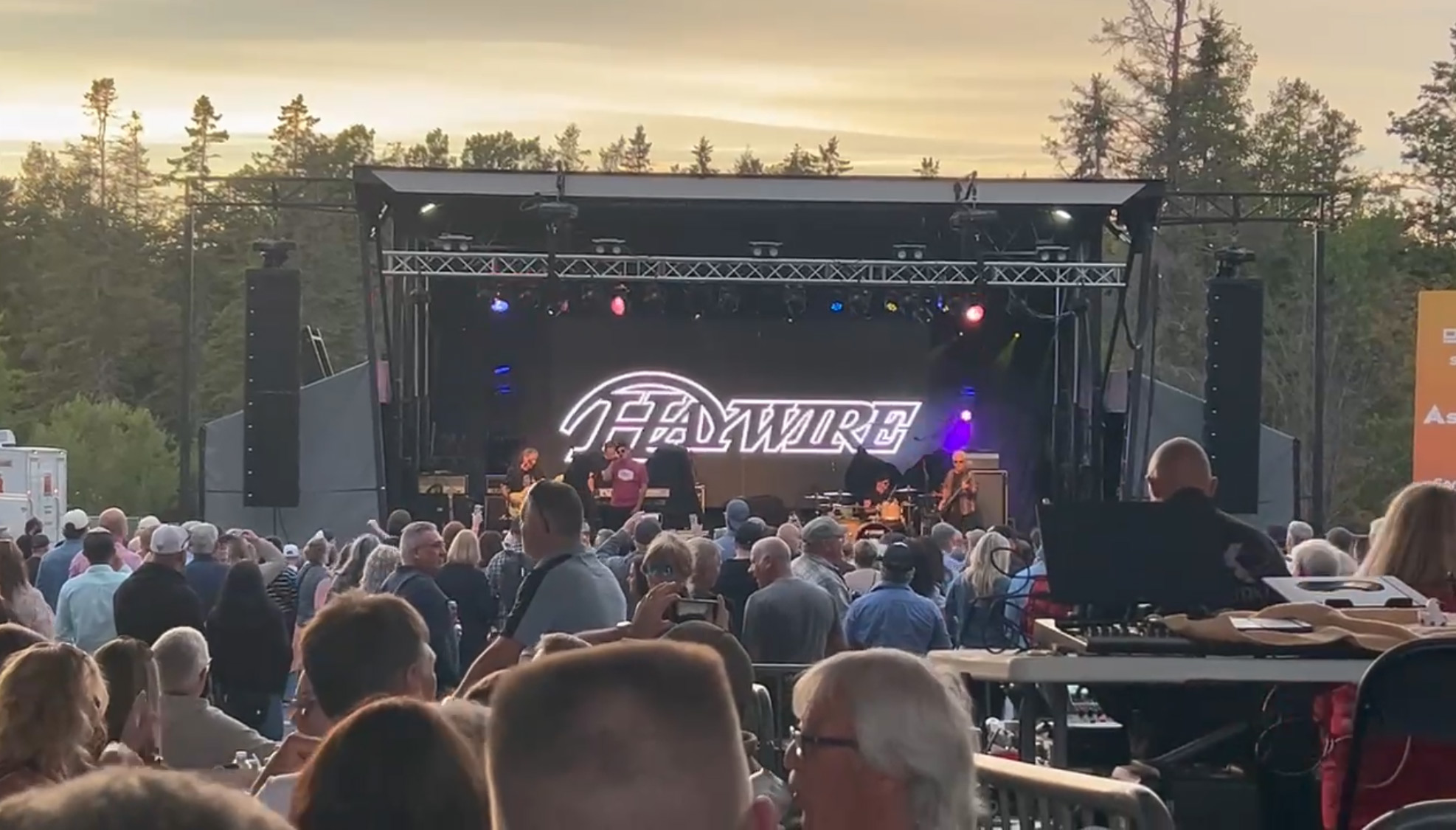
Formed in Charlottetown 1981, the rock band has gone on to sell more than half a million records, spawned a dozen hit songs, won international awards and played with some of the biggest names in Canadian music. It all culminated for band members Paul MacAusland, David Rashed, Marvin Birt, Ronnie Switzer and Sean Kilbride in 2006 when Haywire received the Music P.E.I. Lifetime Achievement Award. The band is also the recipient of an ECMA Lifetime Achievement Award. MacAusland, Rashed, Birt and Switzer formed Haywire in 1981 (with original drummer Scott Roberts) and began touring Atlantic Canada a year later. It was clear the band’s future was bright when it captured one of the biggest rock contests in the region, the Q104 Homegrown Contest, raising the band’s profile. The momentum continued in 1985 when Haywire took first place in the Labatt’s Battle of the Bands in Saint John, N.B., walking away with $10,000. The band used the money to finance a self-titled five-track EP. It peaked the interest of record companies and rock fans bought up all 5,000 copies made. Music Express Magazine dubbed them ‘Canada’s Best Group’ in 1986. Attic Records took noticed and signed the band to a five album record contract that year. That’s when Sean Kilbride jumped on board replacing drummer Ron Leblanc. Haywire went into the studio and walked out with its first album, ‘Bad Boys’, that same year. ‘Bad Boys’ produced three radio hits — Bad Bad Boy, Standin in Line and Shot in the Dark — and sold more than 200,000 copies in Canada.
The album was also quickly certified double platinum.
Riding the wave of popularity, the band quickly went back into the studio after coming off tour and recorded their follow-up —‘ Don’t Just Stand There’. ‘Don’t Just Stand There’ was certified gold (50,000 copies sold) in only four months and would eventually surpass double platinum status (200,000 copies sold). The album also produced three more hit singles that can still be heard on radio today — Dance Desire, Black and Blue and Thinkin’ About the Years, the latter of which became an instant classic with graduating classes and recognized in 1988 as Canada’s most played song.
Later that year, Haywire had the honor of representing Canada at the World Popular Song Festival in Tokyo, performing its hit Dance Desire. Not only was the song a top-10 radio hit in Canada, judges at the contest liked it so much they awarded the P.E.I. rock band the Golden Award.
What followed over the next two years were countless live shows with the who’s-who of Canadian music — Kim Mitchell, Helix, Corey Hart and Honeymoon Suite just to name a few. MacAusland, Rashed, Switzer, Birt and Kilbride were living the dream but the band knew the time was right to take the next step. They wanted a more guitar-driven heavier sound, one which matched the energy the band created in its live shows. They also wanted to expand their fanbase.
Knowing that was going to take all their focus and energy, the band flew to Norway to concentrate and think about nothing except the third album.
Haywire released ‘Nuthouse’ in 1991, an album which opened new doors for the band. It was also a hit with audiences, selling more than 50,000 copies, certifying the record gold. ‘Nuthouse’ gave birth to singles Short End of a Wishbone, Operator Central and the ballad Taken the Pain, a song that MacAusland and Birt performed unplugged to critical acclaim on MuchMusic. The album ‘Get Off’ followed in 1992, an album which combined Haywire’s signature funky groove with that guitar-driven sound underneath. It’s the last studio album the band has released to this point The album produced singles Get Back and Wanna Be the One as well as the ballad Buzz.
Despite all the hits the band had produced over the years, Buzz proved to be among the band’s most popular radio hits. Buzz remained on heavy rotation at radio stations across the country for weeks, becoming the band’s most played single and skyrocketed up the charts, peaking at No. 13 in Canada.
The band’s label chose to release ‘Wired’, a compilation of hit singles in 1993 to complete the contract. MacAusland, Rashed, Birt, Switzer and Kilbride chose to take some time off, pursuing other interests for the next few years before reuniting on New Year’s Eve in 1999.
The group continues to perform across Canada.